
Evans County Court Records Search
Evans County does not publish a single anonymous, full-text court case portal on the county site. The official starting point for Superior Court and State Court case access is Georgia Courts e-access, which routes users to the provider used by the court. Evans Superior and Evans State route to PeachCourt. Georgia Courts notes that court-record searching requires an account after the user follows the provider link, so PeachCourt should not be treated as a free county name search.
Record type matters in Evans County. Superior, State, and Juvenile records are managed by the Evans County Clerk of Superior Court. Magistrate civil claims, dispossessory cases, garnishments, first appearances, bonds, and warrant applications route through Evans County Magistrate Court. Probate, estate, guardianship, marriage-license, firearms-license, birth, and death certificate matters route through Evans County Probate Court. For real estate, lien, UCC, plat, PT-61, notary, and related clerk-authority records, the official search route is GSCCCA Search.
- Start with Georgia Courts e-access for Evans County Superior Court or State Court case records, then follow the provider link to PeachCourt.
- Create or use the required provider account. Public source material did not show anonymous Evans County case-search fields outside that account path.
- For deeds, liens, UCC filings, plats, PT-61 records, notary records, trade names, and related clerk indexes, open GSCCCA Search and choose the correct index category.
- If online access does not locate the record, visit the Clerk of Superior Court or contact the correct local court office for access rules, copy options, and public-status questions.
- For older, sealed, juvenile, restricted, or non-digitized material, ask the record custodian whether inspection is allowed, whether party status is required, or whether a court order is needed.
The Georgia Courts e-access page is the official routing page for Evans County court records that flow through provider access.
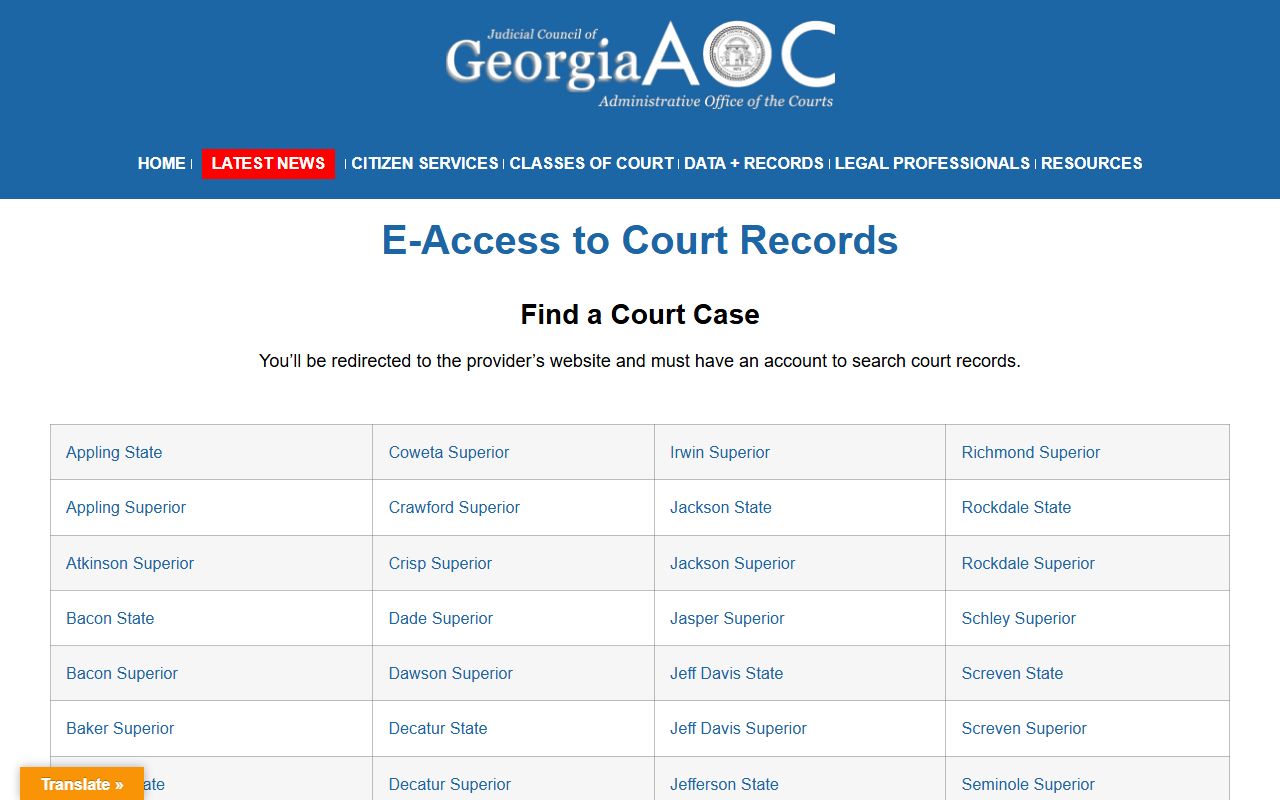
This matters because the Evans County court records path begins with the state routing page, then moves to the provider or local custodian for the actual record.
Evans County Court Records Fields
The visible search fields are split between Georgia Courts e-access, PeachCourt account access, and GSCCCA clerk indexes. The court-case path is account-gated, while GSCCCA exposes categories and search paths for certain clerk records. A person looking for a divorce decree, felony case, misdemeanor case, or State Court file should expect court/provider access or clerk-counter help. A person looking for a deed, lien, UCC, plat, PT-61 record, notary index, or trade-name style clerk record should use the GSCCCA index path first.
| Portal | Field Label / Control | Type | Required | Notes / Format |
|---|---|---|---|---|
| Georgia Courts E-Access | Find a Court Case | Link / button | Yes | Redirects to the provider website for the selected court. |
| Georgia Courts E-Access | Court / provider selection | Link list | Yes | Evans Superior and Evans State route to PeachCourt. |
| Georgia Courts E-Access | Account | Login requirement | Yes | The official page says an account is required to search court records. |
| PeachCourt | Register / Login | Account control | Yes for search access | Public pages do not expose anonymous Evans County court records fields. |
| GSCCCA Search | Search category | Navigation | Yes | UCC, Real Estate, PT-61, Lien, Plat, Notary, and Carbon Registry. |
| GSCCCA Real Estate | Search type | Navigation | Yes | Name, Book/Page, Property Search for select counties, or Premium Instrument Type. |
| GSCCCA UCC | Search type | Navigation | Yes | Name, file number, daily by date/county, secured party, and certified-search request/history. |
The PeachCourt landing page shows the provider side of Evans County court records access for court documents and eFiling.
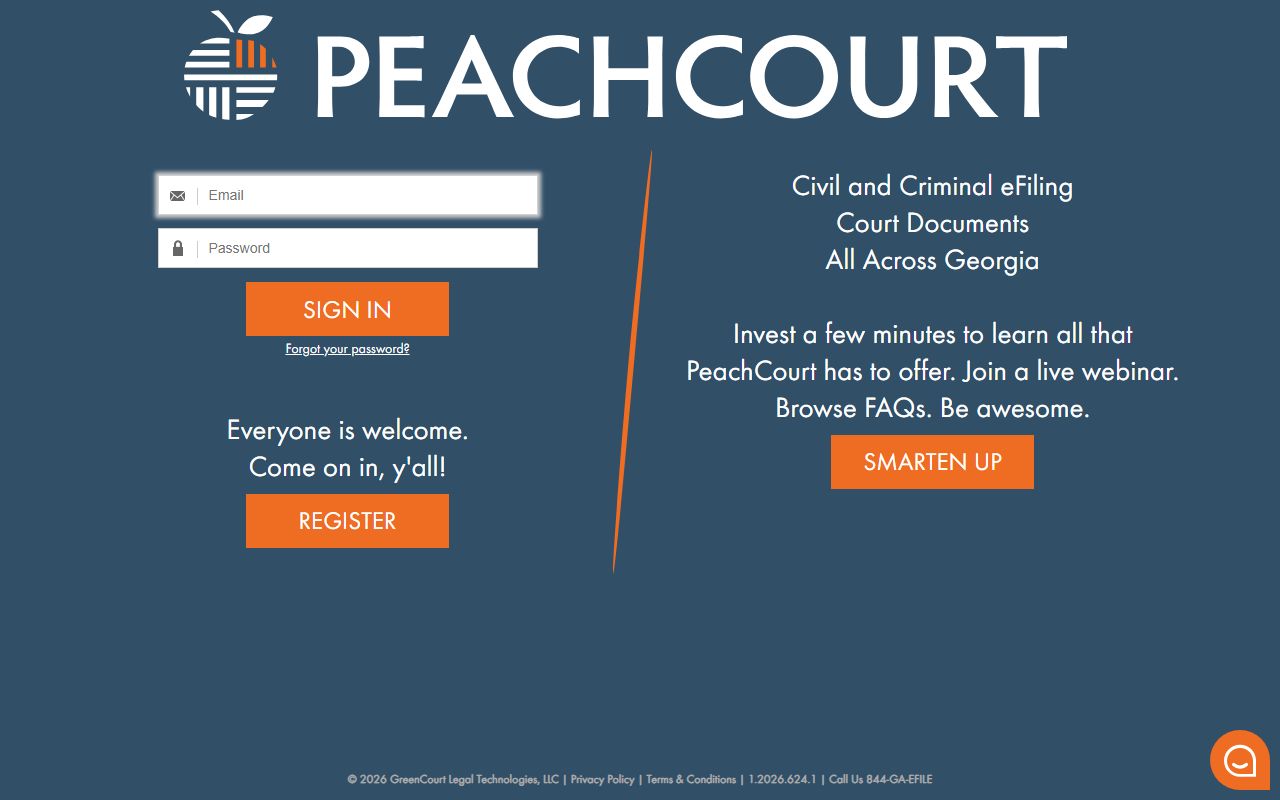
Because PeachCourt access depends on registration or login, a failed public search does not prove that no Evans County court record exists.
Evans County Court Record Types
Evans County court records come from several offices. Civil cases may be in Superior Court, State Court, or Magistrate Court based on the claim and relief requested. Magistrate Court handles claims of $15,000 or less, dispossessory cases, garnishments, personal property foreclosures, Fi Fa matters, abandoned motor vehicle or mobile-home cases, county ordinance issues, and deposit-account fraud. Superior Court handles broad civil cases, equity matters, title-to-land disputes, divorce, felony cases, and matters beyond lower-court limits. State Court handles misdemeanors, traffic misdemeanors, warrants, preliminary hearings, and civil matters not reserved to Superior Court.
Probate and family-related records have their own routes. Divorce is filed in Superior Court and copied through the Clerk of Superior Court. Probate Court handles wills, estates, administrations, guardianships, firearms licenses, marriage licenses, birth certificates, and death certificates. Juvenile Court handles delinquency, dependency, abuse and neglect, children in need of services, and youth traffic matters, but public access is more limited than adult court. Traffic court records split between the court citation file and the Georgia driver record.
- Civil records include complaints, petitions, answers, judgments, garnishments, dispossessory files, Fi Fa records, and lien-related filings.
- Criminal records include charges, warrants, bonds, pleas, motions, hearing entries, dispositions, sentences, and probation terms.
- Family records include divorce and custody filings in Superior Court, with redaction or sealing possible for sensitive facts.
- Probate records include estate, will, guardianship, conservatorship, marriage, firearms-license, and vital-record functions.
- Juvenile, adoption, mental-health, first-offender, and restricted criminal-history records may not be available through ordinary public search.
The GSCCCA Search portal is the official route for Evans County clerk indexes such as real estate, liens, UCC, plats, PT-61, and notary records.
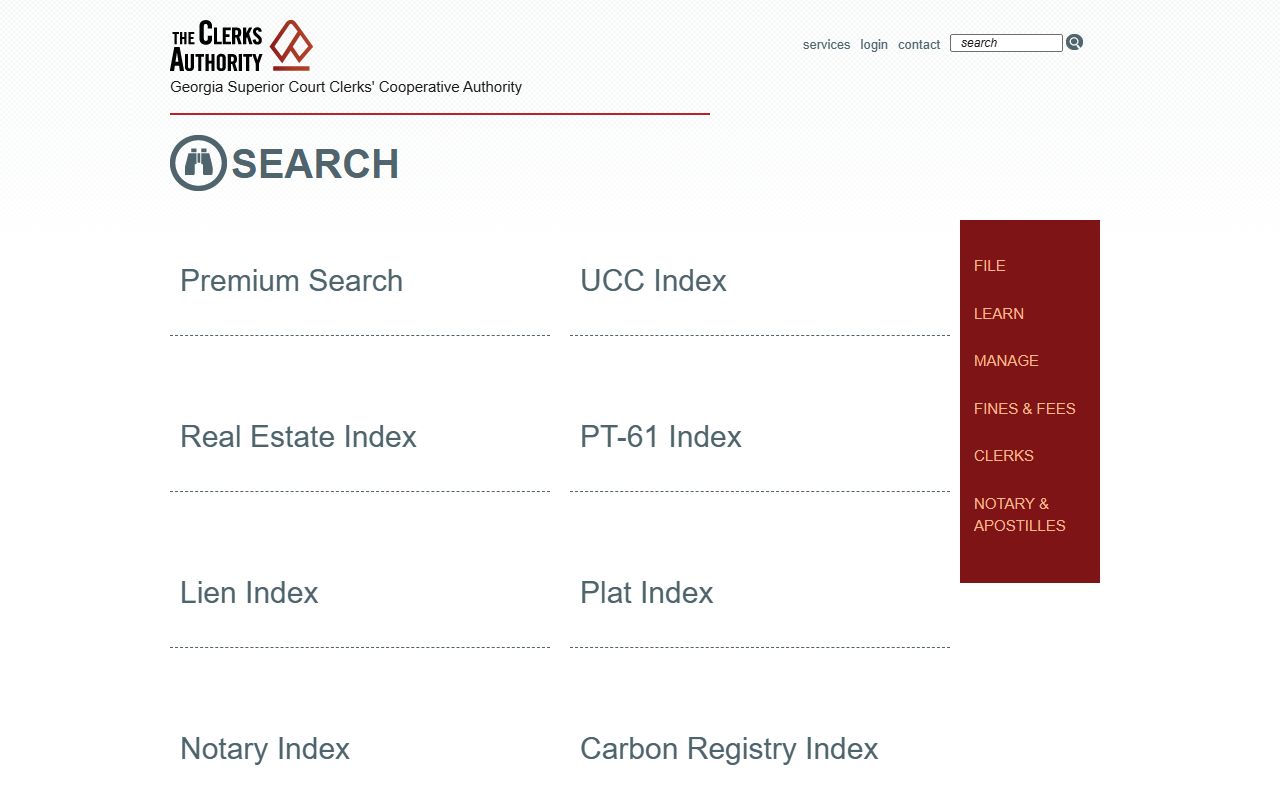
The GSCCCA categories help separate Evans County court records from property and lien records that are kept by the clerk but searched outside PeachCourt.
What Evans County Court Records Show
No anonymous Evans County court-case sample was available from official sources without account access. The field inventory below is therefore based on the researched Georgia court-record elements and visible portal limits, not on a sampled open Evans case. Full case systems commonly show a case number, court, filing date, case type, party names, docket entries, hearings, documents, and dispositions. Criminal charge lines may add statute, count number, misdemeanor or felony status, arresting agency, warrant number, court, and bond information.
| Field | What It Shows |
|---|---|
| Case Number | The court or provider identifier assigned to the Evans County case, docket, warrant, citation, or filing. |
| Court | Superior Court, State Court, Juvenile Court, Magistrate Court, Probate Court, or municipal court where applicable. |
| Filing Date | The date a civil petition, complaint, criminal accusation, indictment, probate petition, or other filing was opened. |
| Parties | Plaintiff and defendant, state and defendant, petitioner and respondent, estate parties, or guardianship parties. |
| Docket Entries | Filings, motions, orders, hearings, continuances, notices, dispositions, judgments, and sentencing entries. |
| Documents | Pleadings, warrants, accusations, indictments, motions, orders, decrees, estate petitions, inventories, and certified copies. |
| Disposition | The result, such as judgment, dismissal, plea, conviction, acquittal, sentence, probate order, or other final action. |
| Redactions | Protected identifiers may be limited under Uniform Superior Court Rule 36.17. |
Evans County Court Records Access
Georgia has a broad open-government policy for public records under state open-records rules and court-access rules. Georgia open-records guidance explains the general public-records process for state agencies, while the Attorney General's Open Government Guide provides state-level detail. Court records also follow court rules. Uniform Superior Court Rule 21 treats court records as public unless access is limited by law or by the rule's sealing procedure. Rule 36.17 requires parties to redact protected identifiers in electronic filings.
Evans County access is still custodian-specific. Superior, State, and Juvenile files route through the Clerk of Superior Court. Magistrate matters route through Magistrate Court. Probate, marriage, estate, guardianship, and vital-record functions route through Probate Court. The key local limitation is the GSCCCA clerk note: "Absolutely no phone-in or write-in searches." That means the clerk may answer office questions, but a researcher should not expect staff to perform a case search by phone or mail. Use official online portals, visit the counter during posted hours, or request certified copies from the office that holds the record.
Note: Court records and agency records overlap, but court access follows clerk procedures and court rules as well as open-records law.
Restricted Evans County Court Records
Some Evans County court records are not searched like ordinary adult civil files. Juvenile delinquency, dependency, children in need of services, and youth traffic records have more limits. Adoption records are generally confidential. Probate Court handles involuntary hospitalization, which is sensitive and should not be expected in a public online search. Guardianship and conservatorship files may include medical, financial, and protected personal data. Divorce and protective-order files may include protected addresses, minor-child details, financial identifiers, and sealed exhibits.
Georgia uses the term record restriction for many criminal-history limits. State guidance says eligible closed cases without conviction and certain misdemeanors may qualify. For arrests before July 1, 2013, the process generally starts with the arresting agency. For arrests on or after July 1, 2013, the person usually contacts the prosecutor. In Evans County, felony and many criminal matters involve the Atlantic Judicial Circuit District Attorney, while State Court misdemeanor prosecution may involve the solicitor-general listed by the Prosecuting Attorneys' Council. Restricted records are not destroyed. They may remain available to criminal justice agencies and judicial officials.
Evans County Court Records Counters
In-person access is important because Evans County does not have one county-hosted search system for every case type. The Clerk of Superior Court is the counter for Superior, State, and Juvenile filings, and the same office is the starting point for divorce decrees, felony files, State Court case files, and certified copies from those courts. Magistrate Court is the better contact for small claims, dispossessory actions, garnishments, warrant applications, first appearances, and bond matters. Probate Court handles marriage, estate, guardianship, firearms-license, and vital-record functions.
Evans County Clerk of Superior Court
123 W. Main St.
P.O. Box 845
Claxton, GA 30417
(912) 739-3868
8:00 a.m.-5:00 p.m., Monday-Friday
Evans County Magistrate Court
201 Freeman Street, Suite 7
Claxton, GA 30417
(912) 739-3745
8:00 a.m.-5:00 p.m., Monday-Friday
Evans County Probate Court
201 Freeman Street, Suite 9
P.O. Box 852
Claxton, GA 30417
(912) 739-4080
8:00 a.m.-12:00 p.m. and 1:00 p.m.-5:00 p.m., Monday-Friday
Probate Court records counter
The City of Claxton official site is relevant when a city citation, ordinance matter, or municipal contact is part of an Evans County court records search.
Claxton municipal details help users avoid sending every Evans County court records question to the county clerk when a city-level contact may be the correct source.
The official City of Claxton, GA app listing shows city notifications and staff contacts, not a sheriff warrant or court-record database.
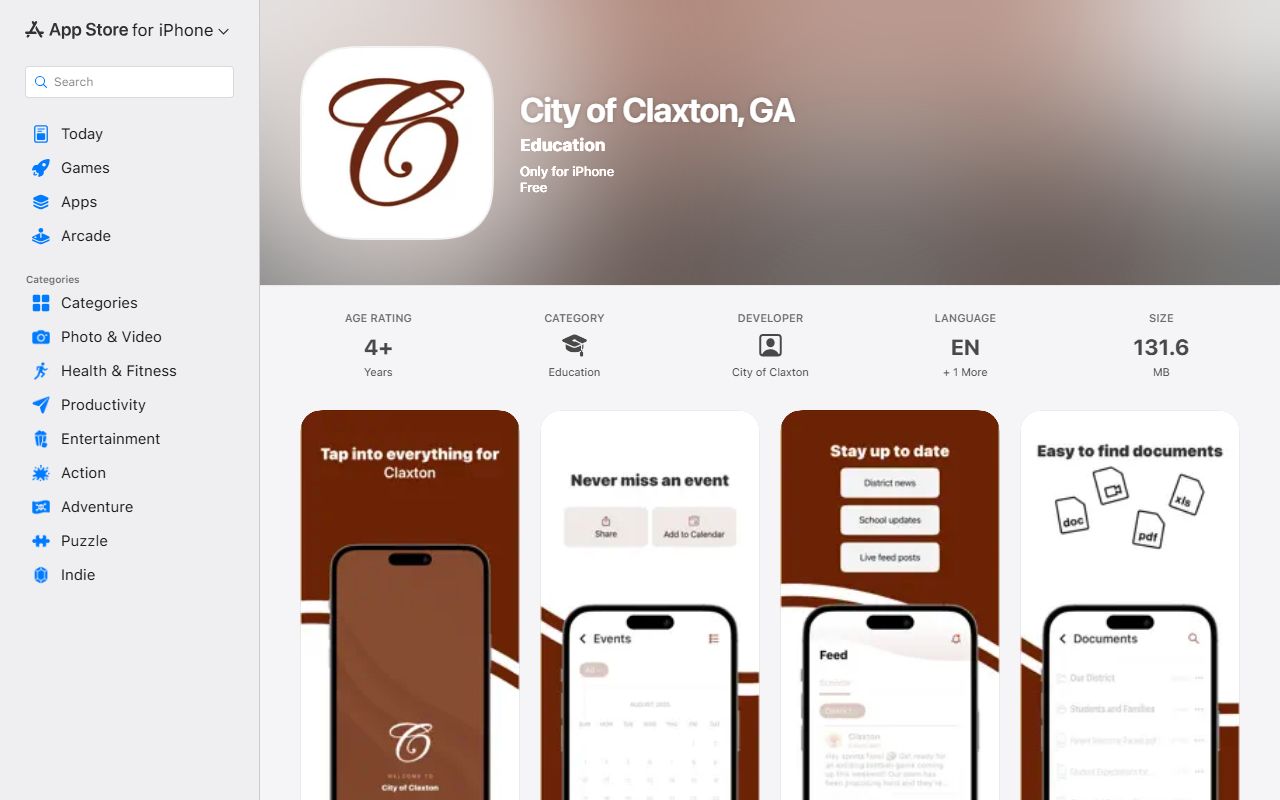
The app may help with city contact awareness, but Evans County court records still require the official court, clerk, or provider channels listed above.